
Over the course of its episodes, Duang With You builds a response that goes beyond simple emotional identification. Something I hadn't felt in a long time, even with technically well-executed dramas over the past year. A sensation, something in the body reacting to what I was watching that wasn't just the usual excitement of seeing …

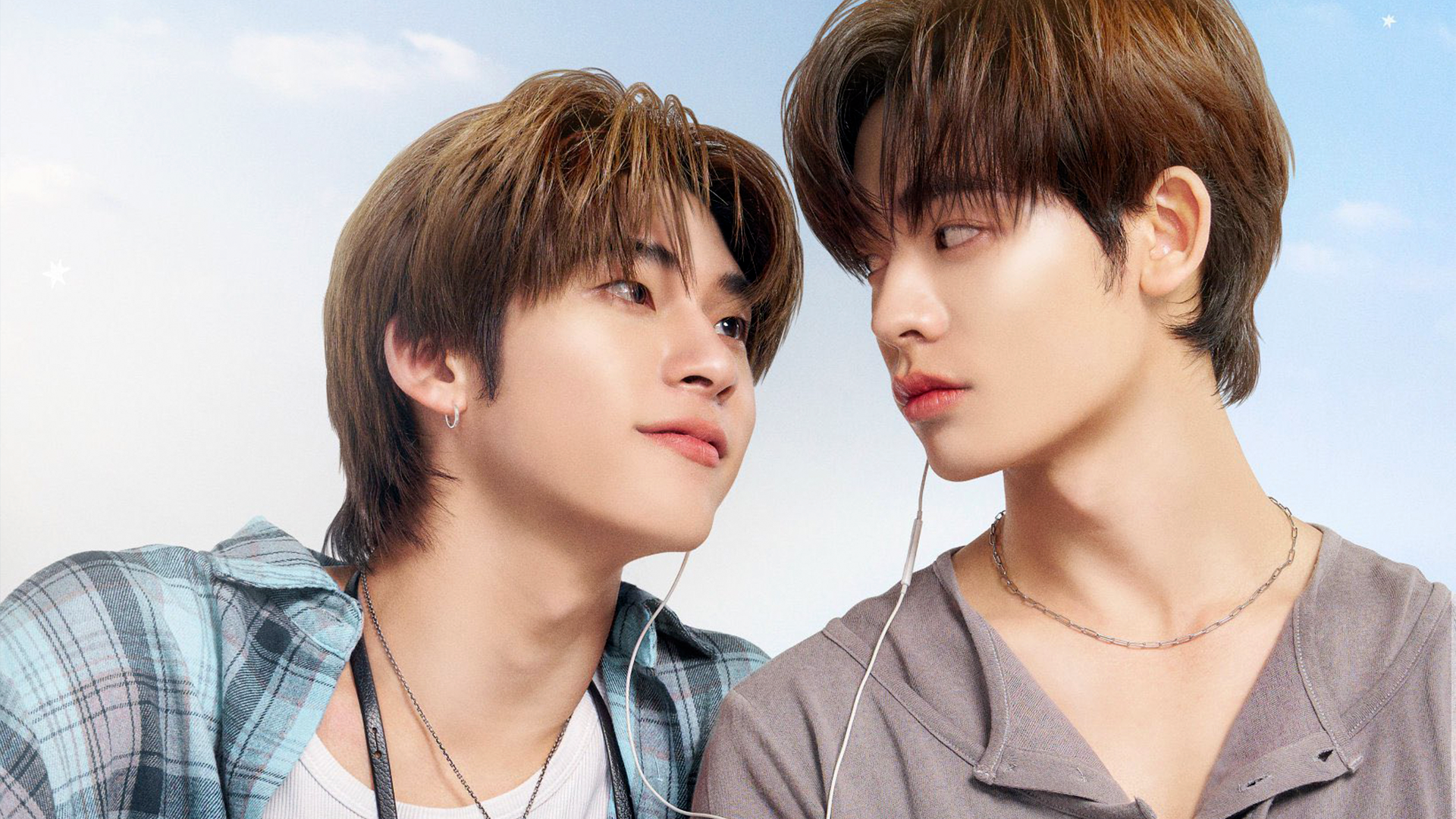
Over the course of its episodes, Duang With You builds a response that goes beyond simple emotional identification. Something I hadn’t felt in a long time, even with technically well-executed dramas over the past year. A sensation, something in the body reacting to what I was watching that wasn’t just the usual excitement of seeing a cute scene.
I did a lot of research and I think I found the closest definition: “butterflies in the stomach.” A physiological response to intense emotions, such as passion, anxiety and anticipation, in which the brain reduces blood flow to the stomach — the technical definition. But honestly? A youthful LGBT shot of oxytocin being injected one moment after another.
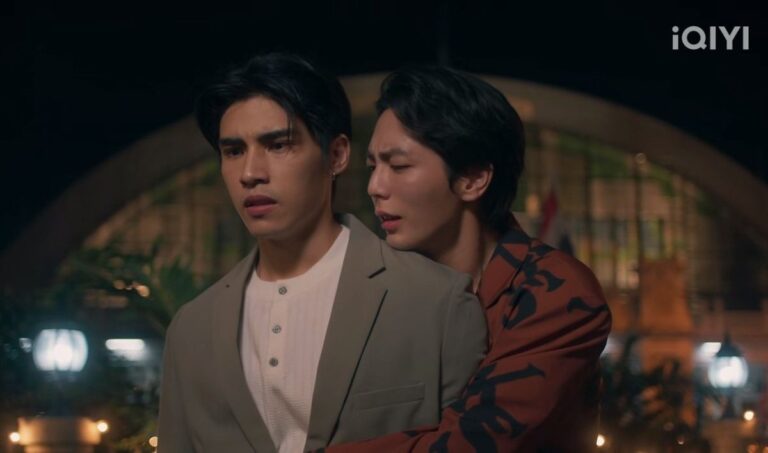
In the plot, we meet Duang (TeeTee), an arts freshman who feels time stop when he falls in love at first sight with Qin (Por), a handsome, cool guy from the music program. From then on, the boy wages a tireless battle to win him over. There’s just one problem: not even the hottest guys have managed to hit on him. Fortunately, Duang doesn’t give up easily and goes all in on his plan to make young Qin fall in love with him.
Duang With You is a Domundi TV production, the studio that delivered one of the best and most well-produced series last year, Khemjira (2025), so quality was expected — and indeed, there was more than enough. In the first episode, I was even a bit wary of how the production would handle Duang’s reactions, which were sometimes a bit over the top, but this quickly proved to be a narrative choice for the start of the series, which begins by embracing broader comedy and gradually tones it down, maturing along with the characters, and nails that balance.
Identification and LGBTQIAP+ experience in Duang With You
Going back to the starting point: the “butterflies in the stomach.” Although young people in general go through anxious moments in romantic relationships, I think this carries stronger emotions when we talk about LGBTQIAP+ bodies, because we’re constantly crossed by the fear of rejection and of not being loved back, imposed by society itself.
Duang With You understands this.
Whether through TeeTee’s commitment, which translates these anxieties naturally, through the direction of Kla Nathawat, who shows growth with each project, or through Por’s performance, which gradually changes the way he receives and reacts to Duang’s reactions. The fact is that Duang With You managed, in this respect, to do what many try and fail to do: create real identification. Even though the target audience is diverse, young gay men could see themselves in those moments. I felt like I was in Duang’s place, feeling the same feelings and sensations of getting a reply from the guy he’s interested in.
Touch as language: what defines a gay relationship
I need to bring up a central element that sets Duang With You apart from the rest: touch.
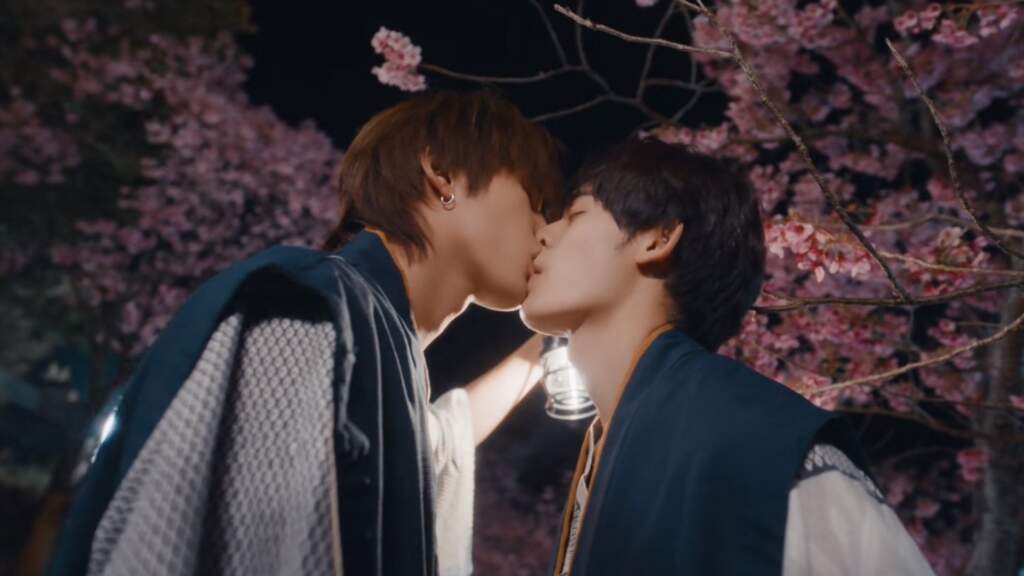
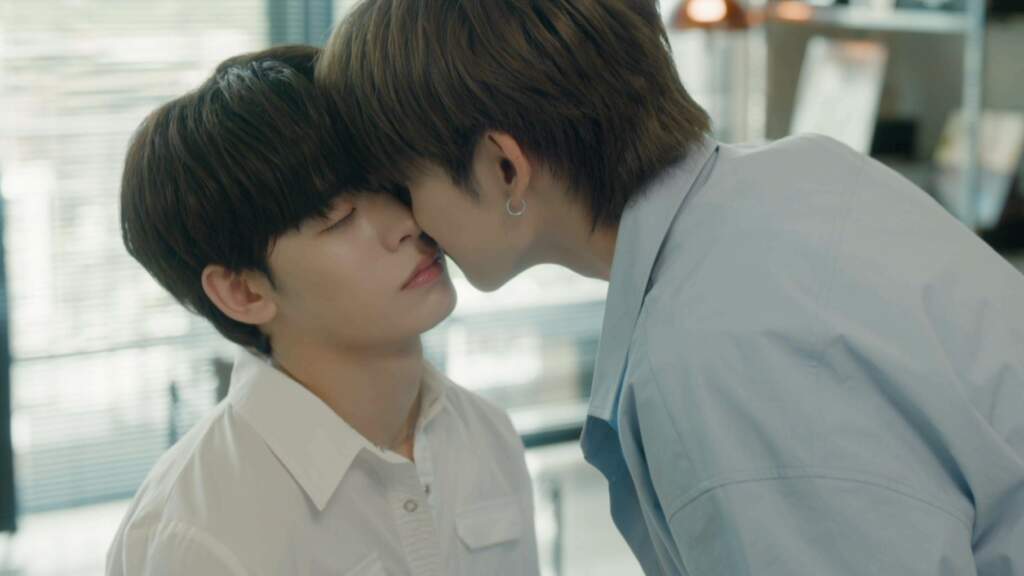
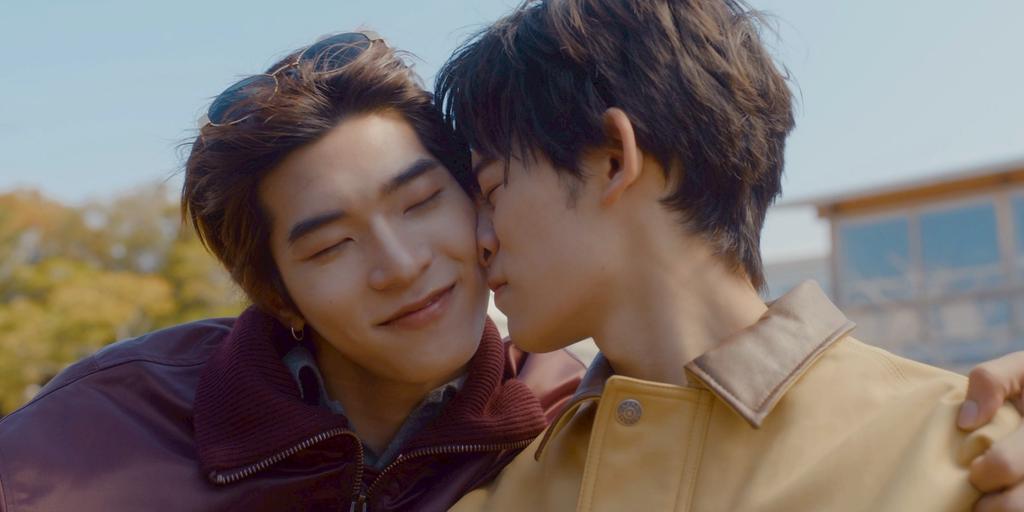
I often find myself questioning what production companies define as a gay relationship. Some productions still seem to reduce it to delivering one or two sex scenes, maybe three kisses, or perhaps four with repeated frames throughout the whole series, or sometimes not even that, and for them that’s good enough. But no, that’s not it. A gay relationship is built with touch, with unexpected hugs, with everyday affection, with nose kisses, with noses touching, with the comfort of being with each other. None of this is cliché; this is reality. And the series hits the nail on the head here.
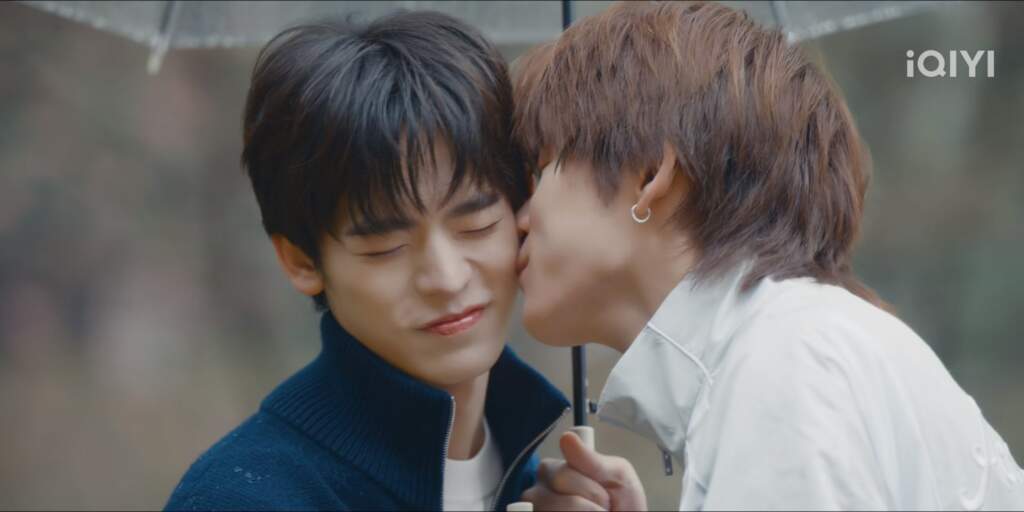
I’m sorry, but unfortunately I couldn’t count how many series have been released where the leads didn’t touch unless it was in “steamy” moments, or not even then. Fortunately, there are people good with numbers who did a more interesting count: how many times Duang and Qin exchanged little kisses during the episodes since they started getting involved. 230 times1, yes, 230. And that’s just an approximate number. Duang With You never suffered from that problem.
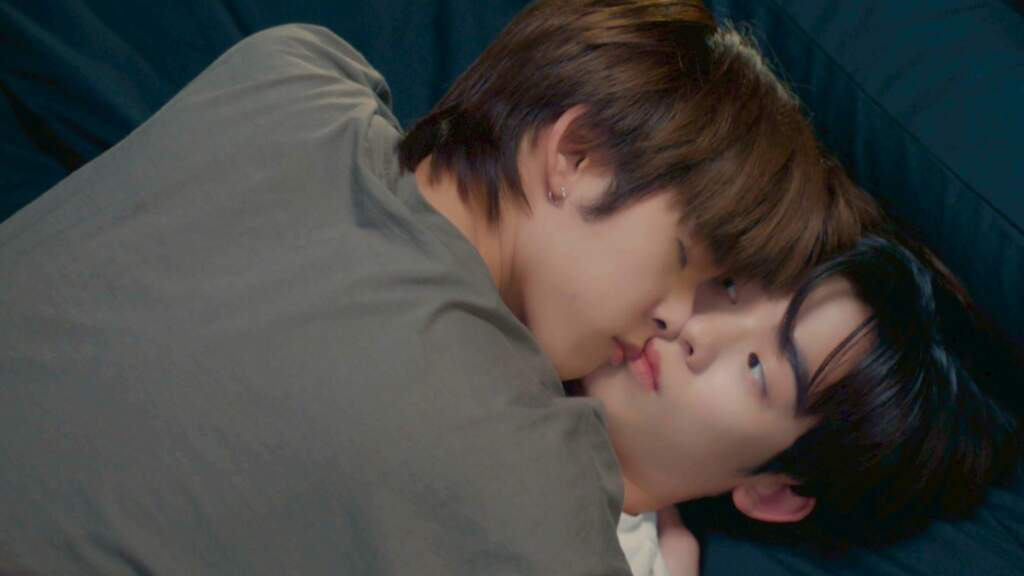
While many BLs treat physical contact as a reward or a climax, here it’s constant and especially natural. Couples touch, couples kiss, couples cuddle, and that’s all Duang and Qin did. The highlight goes to the end of episode 8, where the two spend minutes in silence just touching, smiling and rubbing noses. It’s simple and intimate. Duang really is this affectionate “puppy,” while Qin, an initially more reserved polar bear, gradually gives in, and this dynamic holds up the couple’s development.
Affection and narrative coherence
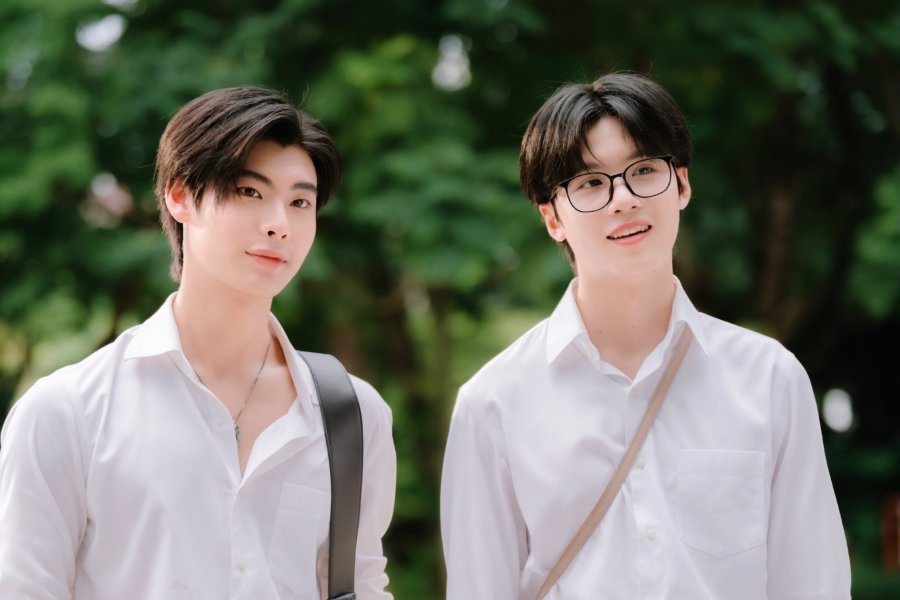
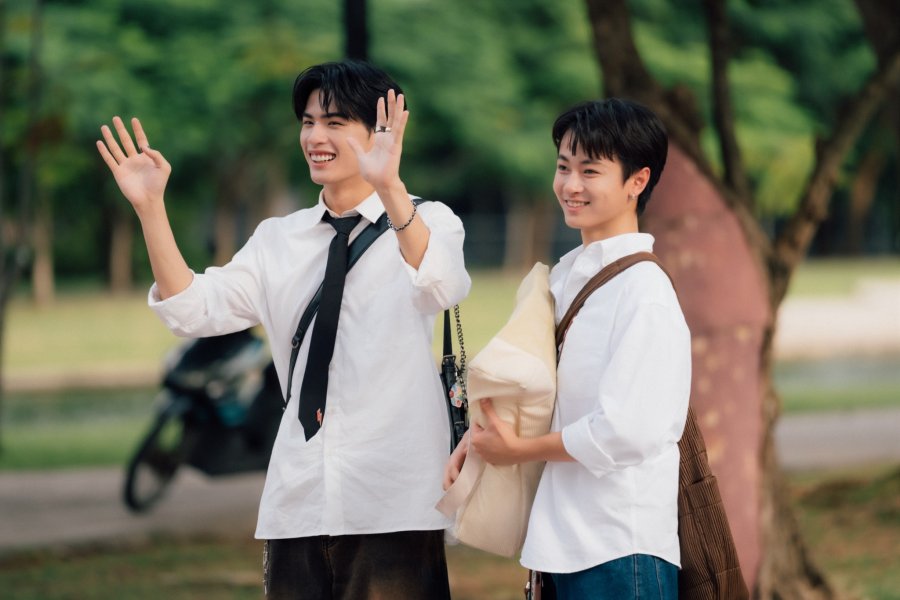
Another important strength is how Duang With You portrays touch between men beyond romance. In many Southeast Asian contexts, physical contact between friends is common, and when we talk about LGBTQIAP+ relationships, this is even stronger, including here on the other side of the world, and the series respects that.
Right in the first episode, the plot shows us what Duang’s relationship with his friends is like. They’re always clinging to each other, close, and constantly teasing one another. It may seem like a silly detail, but it isn’t. Many productions ignore this and create an artificial distance between male characters, even in queer narratives. In Duang With You, there’s cultural and narrative coherence.
Family, trauma and emotional growth
On the emotional side, Duang’s and Qin’s family relationships really touched me and add important layers to the story. Duang comes from a family described as particularly warm, where everyone hugs a lot, without coldness, and although there are judgments like in every family, they deal with them differently, as if it were a joke, and recognize each other’s dedication and love.
Qin, on the other hand, grows up in a stricter environment described as colder; even though there’s a lot of love, it’s marked by a distance that is not only physical but also emotional, something explained in later episodes. The series avoids oversimplification. There’s no “good” family and “bad” family, but different ways of loving, and of failing.
Everything is then explained when Qin shows fragility while revisiting past traumas from the 6th episode of Duang With You on, when he and Duang perform their musical presentation. That’s when Qin’s walls start to come down. Emotional neglect, the abuse he suffered as a child from his nanny and his parents’ absence shape the character profoundly. I clearly remember how much the line “what I really wanted was… a hug from my parents” hit me; it was impossible not to get emotional.
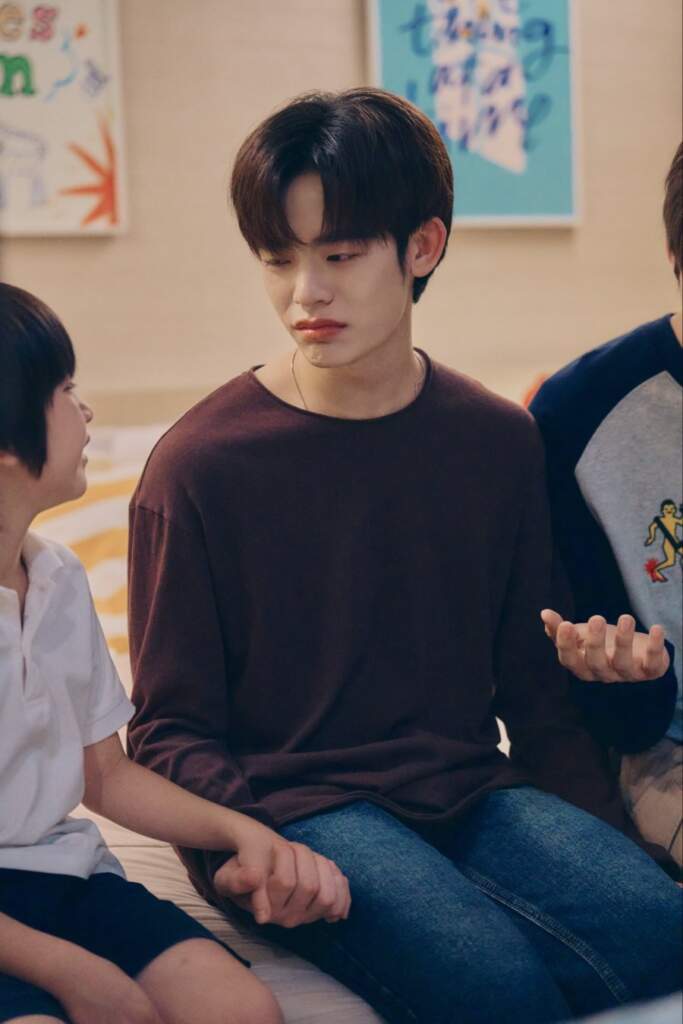
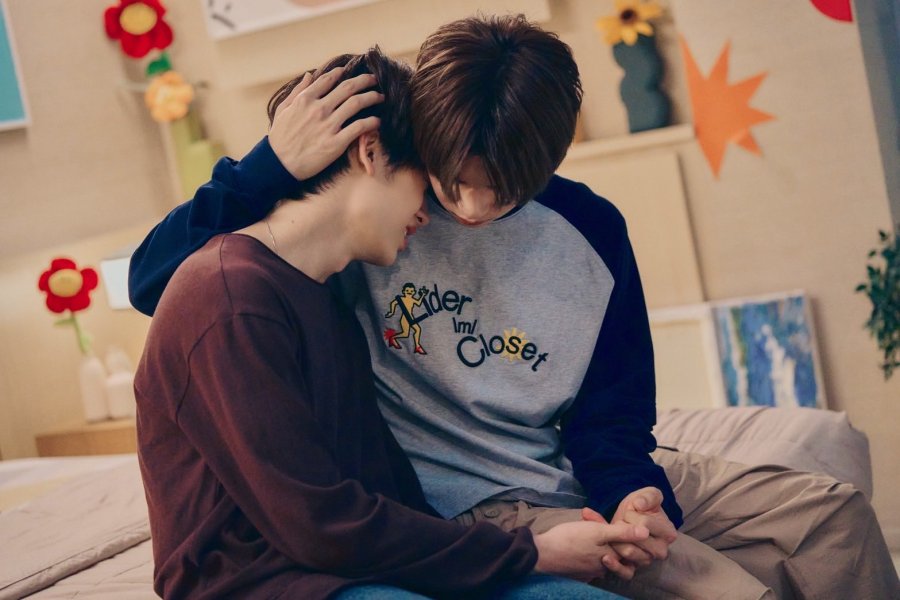
Even full of love, parents make decisions that, often while thinking of what’s best for their children, end up having a different result. I share a lot of Qin’s feelings: what happens to us as children is never forgotten; it shapes who we become forever. There’s no way to change the past; what’s done is done. But there’s a way to be better in the future, while there’s still time. Only love can glue the cracked pieces of a heart back together, even if the scars remain.
The scene where Qin holds his child self’s hand and then lets go to hold Duang’s is one of the strongest moments of the series. Por Suppakarn, your future in acting is bright and promising. I hope you always remember that you left a mark on the memory and hearts of many people who found themselves in Qin’s feelings. Your delicacy will never go unnoticed.
I imagine this family section is getting long, but there’s no way not to talk about it: for Qin, Duang is more than a boyfriend. Love here is more than words; it’s action. He helps Qin open up to his parents, put into words pain that had been kept inside and face a past that was never resolved.
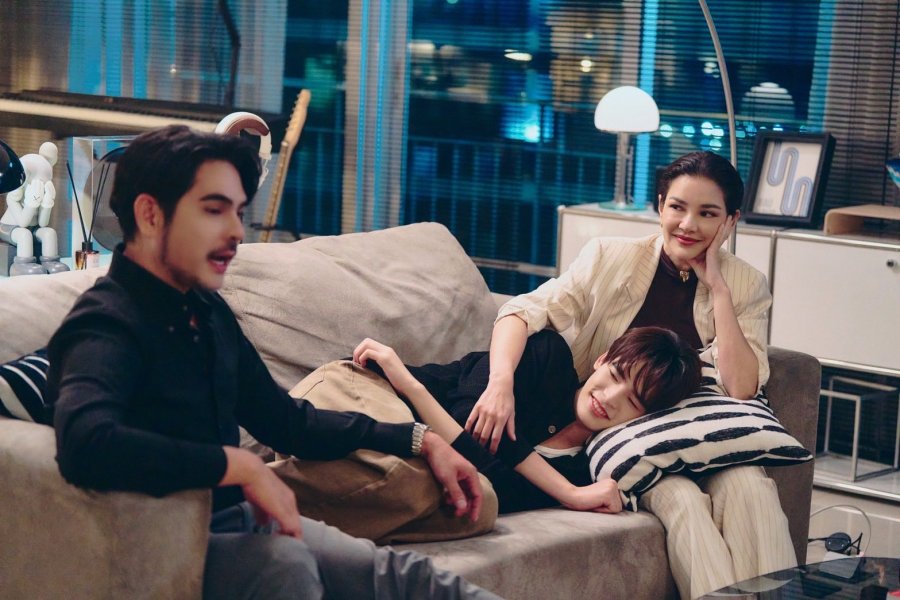
Even without understanding at first, Qin’s parents truly come back to him. They ask for forgiveness. And seeing Qin lying in their laps, after so many episodes marked by physical and emotional distance, is a big turning point and shows how love is still possible today.


Technical aspects: sound and cinematography that bring us closer
Technically, Duang With You gets a lot right consistently. The sound design is one of its greatest strengths (and no, I’m not talking about the countless sound effects): breaths, small frictions, the sounds of touch, of lips, of nose kisses and of their closeness are used intelligently. All of this brings the viewer closer to the characters and to what they were trying to convey.
The cinematography stays consistent and on point throughout. It’s not cinematography that seeks to steal the spotlight, but one that sustains the narrative’s tone and, at times, goes beyond.
The cameras even take on a symbolic role in the story. Even before their relationship deepens, they already work as a point of connection between Duang and Qin, since both like analog cameras, which inspired Duang’s first gift to Qin as boyfriends. When he buys an extremely expensive camera to give him, they make their first decision as “partners,” showing how a couple should handle situations like this: choosing to split the cost between them so it wouldn’t weigh on anyone, and turning the object into something that belongs to both of them.
Conclusion
Duang With You proves that the problem was never an excess of university BLs, or that we’re tired of them. The problem has always been execution.
By betting on intimacy, natural touch and a very strong emotional build, reinforced by consistent technical decisions and a well-applied narrative, the series stands out in a landscape crowded with poorly used formulas. Yes, we can call Duang With You a comfort series. Maybe the most comforting series of all!