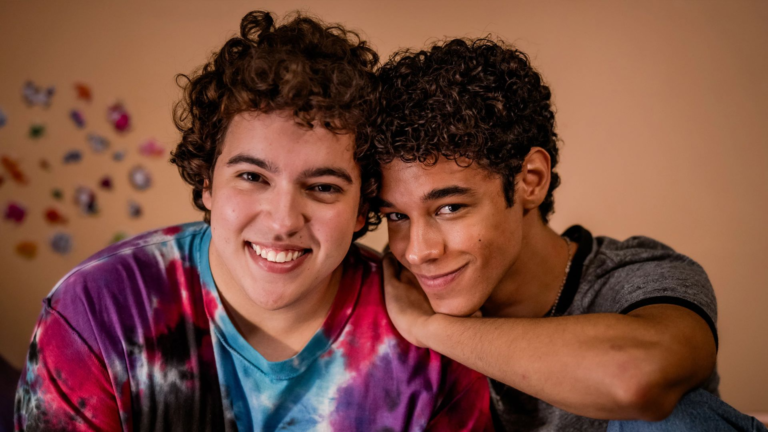

The internet seems to love Thailand, and one measure of this passion is the popularity of the Thai military draft lottery, which has become a sort of canonical event for netizens. Every year, images of young Thai draft candidates—especially LGBTQIA+ ones—go viral on social media because of their seemingly comic nature. If by some miracle …

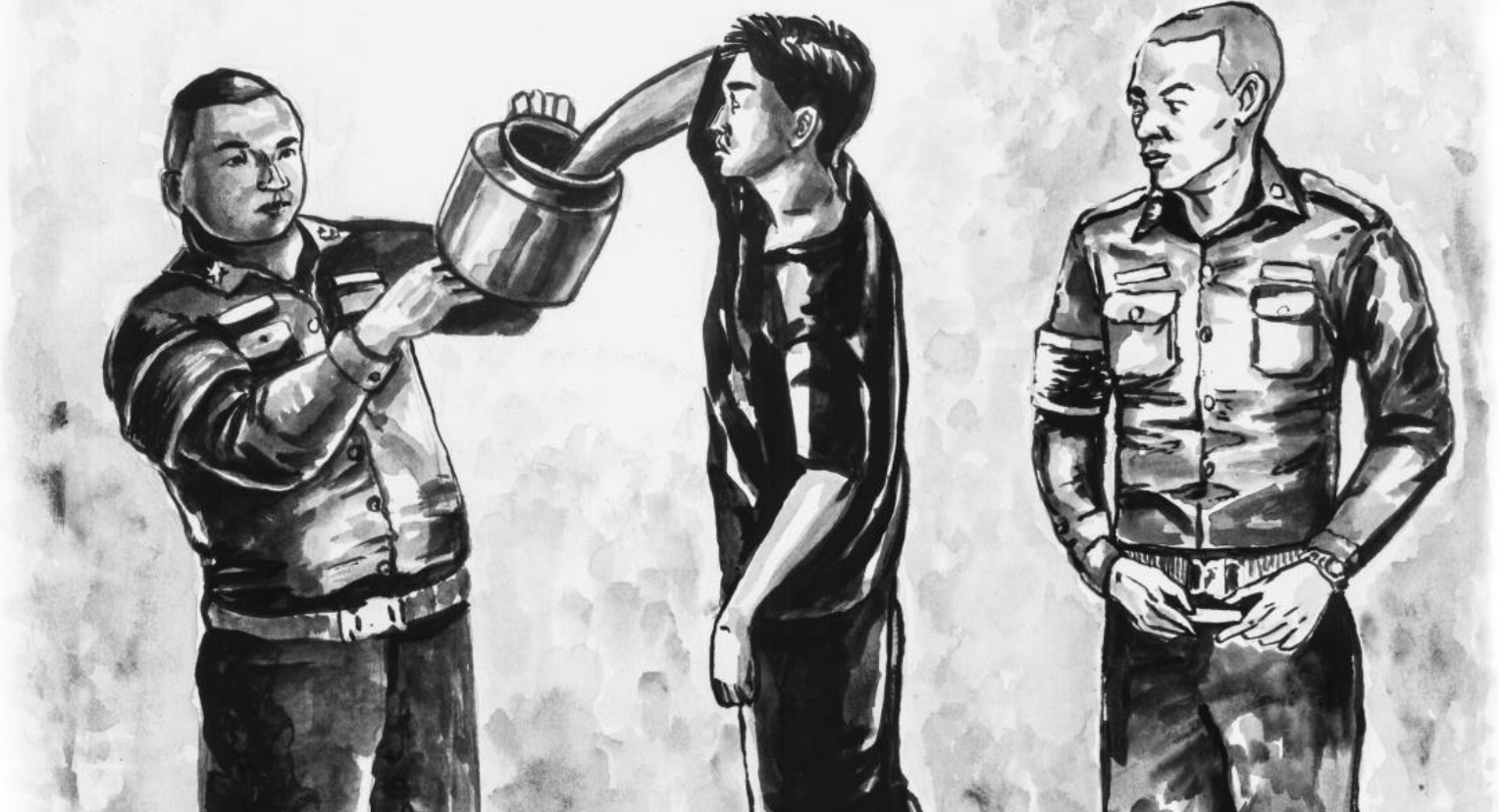
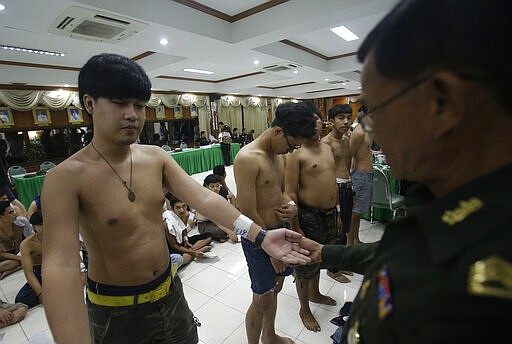
The internet seems to love Thailand, and one measure of this passion is the popularity of the Thai military draft lottery, which has become a sort of canonical event for netizens. Every year, images of young Thai draft candidates—especially LGBTQIA+ ones—go viral on social media because of their seemingly comic nature. If by some miracle you don’t know what I’m talking about, it’s one of the final stages of the annual selection for the Thai Armed Forces. The candidate must report to a military center, where he draws a small envelope from an urn. It can reveal one of two cards, black or red. Black means exemption and relief for most candidates. Red, however, means the would-be soldier owes up to two years of military service.
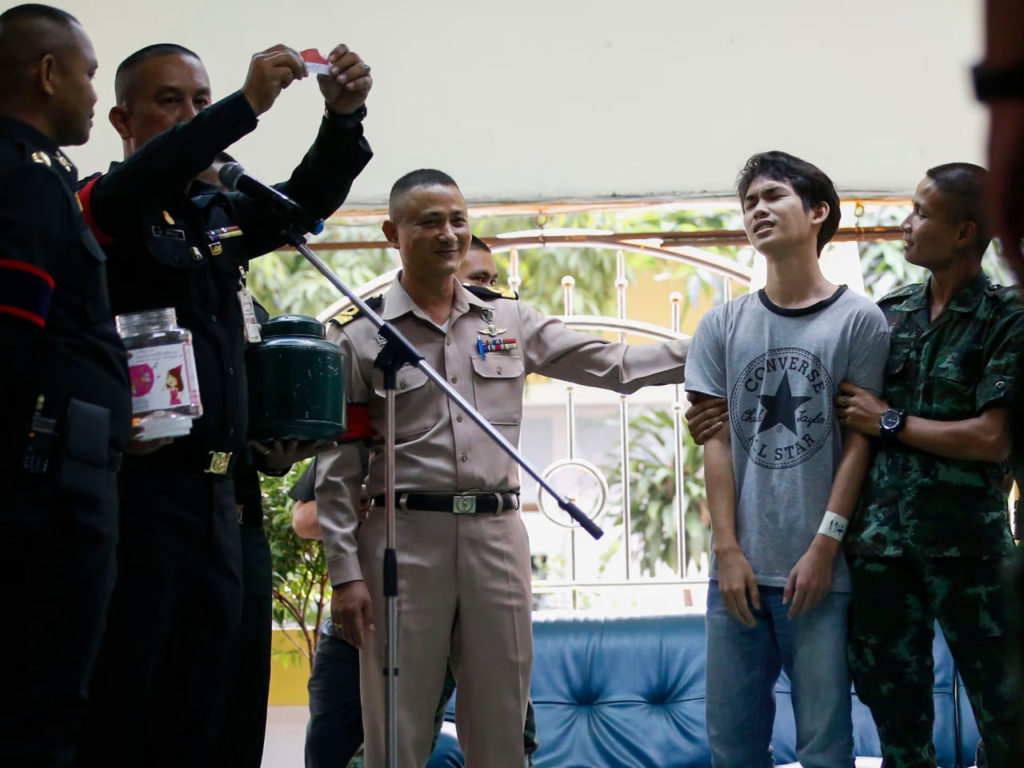
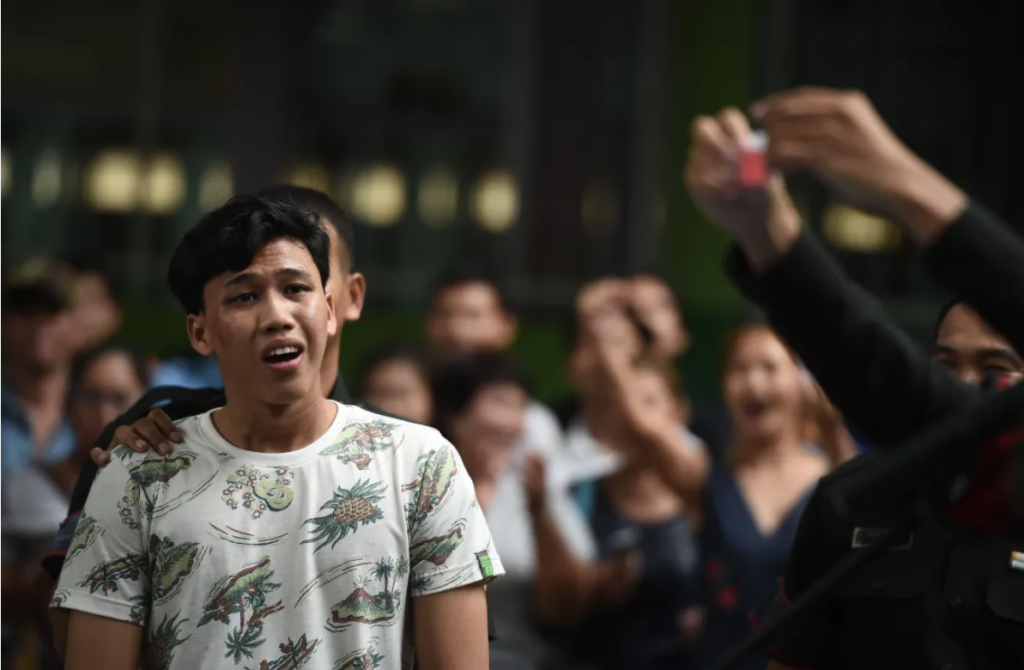
The event’s popularity comes largely from the gay and trans participants, who often scream, cry or faint depending on the color they draw. Netizens are struck not only by the colorful way the lottery unfolds, but by the apparent friendliness of the soldiers present toward the LGBTQIA+ population. The uniformed men not only smile, they also seem to enjoy the over-the-top screams, howls, sobs and wails of the gay and trans candidates. To give you an idea of the scale of it, one soldier is in charge of holding the candidate so that, if he faints, he doesn’t hit the floor after drawing a red card. On top of that, the audience cheers as the draw goes on, reacting not only to the color drawn but also to the candidates’ physical reactions, excitement, fainting spells or trembling.
Seen from afar, this event looks like a big show of who can serve the most drama, all inside the barracks of the Thai Armed Forces. The image left behind is that of a welcoming, open country that respects diversity. Most comments from Brazilian netizens on posts about the topic show this: almost all of them praise the Thai Armed Forces for their empathy and acceptance of LGBTQIA+ people. Some go further and say they wish Brazil had a similar system for selecting new soldiers. I remember reading a comment from someone who said the lottery was equal for everyone, making it a fairer enlistment system than ours.
The thing is—and I’ll be very direct—this reputation for respecting diversity and for the fairness of Thailand’s military recruitment system is simply false. First, because the Thai enlistment process isn’t as welcoming to LGBTQIA+ people as it seems, and second, because the lottery itself is surrounded by hidden elements that make it, in a sense, a big performance. Below, I’ll explain what I mean by these claims. I’ll do so using the anonymous stories of Thai people who crossed my path and confided in me about their experiences with military enlistment. I can’t use their names for safety reasons, but to make the text flow better, I’ll use pseudonyms: João, Pedro, Marcos and Rafael. Since the accounts aren’t very recent and were gathered over several years, the words reconstructed here aren’t fully faithful quotes of what was said to me, but reproductions of the ideas and meanings they expressed.
João
Years ago, when I was still a high school teacher, I started noticing that the male students didn’t show up to class on Thursdays. I’d arrive to teach my Social Studies course and find a room full of girls and far fewer students than usual. In Thailand, those of us who teach get used to the fact that there’s always some extracurricular activity happening during class time and that it’s normal for many students to miss class often. So I no longer cared when I noticed only half a class was there. It was completely ordinary. What took me a while to notice was the peculiarity of Thursdays. Only the boys disappeared, and the girls were always there.
One day I found out the truth when I talked to João, one of the students who “disappeared” on Thursdays. He smiled, happy to explain something about Thai culture I didn’t know: “Every Thursday we go to a military camp for training.” My bewilderment must have shown on my face, because he laughed and asked, “Is something wrong?” I said I was surprised, because I didn’t imagine Thai teenagers loved the Armed Forces so much that they’d sacrifice hours of study to go to military training. His answer, in a more serious tone, made me even more curious: “But we don’t like the Armed Forces, teacher. We hate them! We go to this military camp because we don’t want to take part in the draft lottery; it’s the best way to escape!”
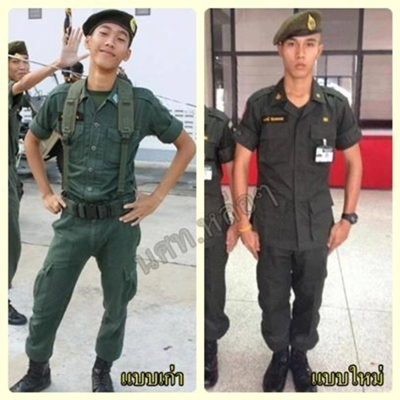
That last word, “escape,” kept rolling around in my head like a pool ball bouncing back and forth, refusing to drop into the pocket. “What do you mean, escape?” I asked. João, a curious and friendly boy of about 17 with round glasses that made him look like an Asian Harry Potter, explained that there are some ways to “beat the system,” legally or not. The training that took place every Thursday and made my students “disappear” was one of those legal ways to escape. It’s the ร.ด. system (pronounced “Ró Dó”), short for นักศึกษาวิชาทหาร, usually translated as Territorial Defense Student or Reserve Officer Training Corps (ROTC). It’s a military training program for high school and university students that, in practice, works as one of the main legal ways to avoid the compulsory military service lottery. The program is run by the Thai Army’s territorial command and is offered to students aged roughly 15 to 22. The student keeps studying normally but attends parallel military training. If he completes three years, he is exempt from the conscription lottery.
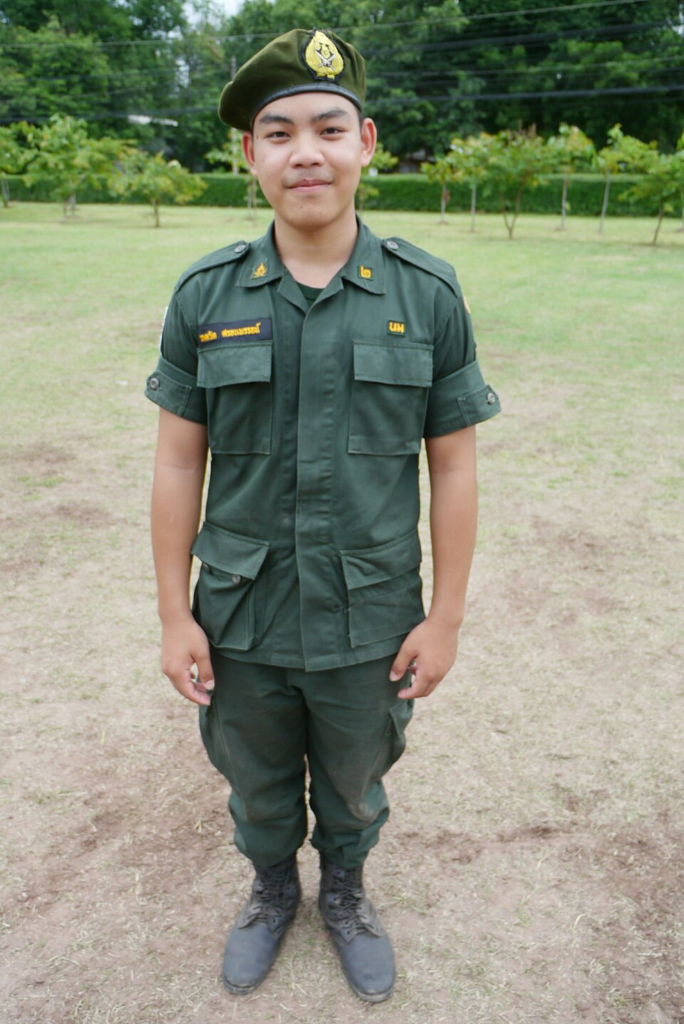
Rolling his eyes, João also explained that not every school offered this program, only the richest and most influential ones, which meant the military lottery didn’t reach the elites and upper-middle classes who could afford expensive schools. That made me think about how hard my life would have been if I’d been born Thai. I certainly wouldn’t have had the money to escape the lottery legally. The school where I taught at the time charged about 50,000 baht in fees, which today is about 7,800 Brazilian reais. In other words, my students had the option of avoiding the draft lottery because of their privileged economic conditions. Even so, João continued, they still had to lose precious hours of study on Thursdays to take part in “boring, repetitive exercises that were good for nothing.” I looked him right in the eye—such a smart, studious student who worried about university entrance exams—and asked if it was worth missing school to avoid the dreaded lottery. He didn’t even blink: “The sacrifice pays off. Real military service is much more violent and takes your whole week, not just Thursday. It’s a good deal.”
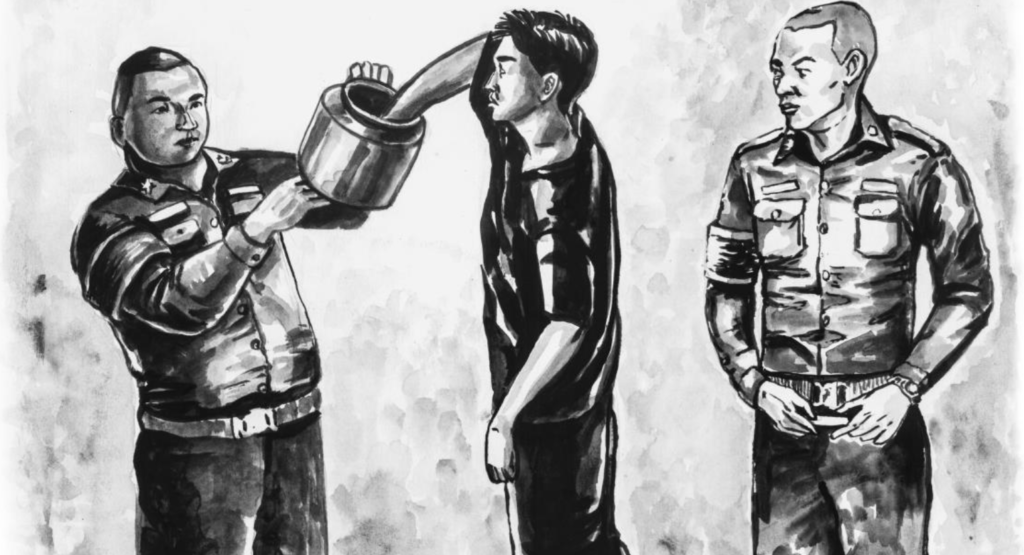
When I heard the word violence, I asked for more details, and João told me the Armed Forces were known for several cases of torture and even deaths inside the barracks. Often, the military refuses to punish the killers and torturers. “That’s why everyone tries to escape. I’m lucky because my parents can pay for this privilege. I feel sorry for those who can’t.”
After that we changed the subject and talked about our favorite Japanese anime.
Pedro
Pedro is an effeminate LGBTQIA+ young man who considers himself non-binary. He has long, painted nails and dyed long hair, and likes pop divas and beauty pageants—but he uses a masculine name because he prefers it (which is why I’m using Pedro and “he” in this text). He told me, with great dread, about the “most tense moments of his life,” when he went through the military enlistment process.
Trans individuals can be exempted from compulsory military service, as long as they show up at the recruitment center with hospital documents provided by a doctor certified by the enlistment system proving that the patient “has a gender different from the one assigned at birth.” If so, they are exempted.
Pedro told me about the ordeal he faced trying to get the exemption through the medical route. He couldn’t ask any doctor he knew for a certificate, since none of them were accredited. The military didn’t seem to care about people living in the countryside, since there were no options available in certain areas, and he had to travel more than 100 km to reach the nearest accredited clinic. There was an even harder barrier: his friends warned him that many doctors would only issue an exemption certificate to trans women who could prove they were on hormones and had breast implants. That wasn’t his case.
The first doctor—actually a woman—proved his friends’ theory right. “She was very rude to me,” he said. “I was more hopeful because she was a woman; I thought she’d be more sensitive with me, but I was wrong. She did several physical exams, groped my body, asked indiscreet and somewhat humiliating questions. Then she said I didn’t qualify and refused to sign a certificate.”
Pedro didn’t give up and decided to travel somewhere else in search of another doctor. The experience was as traumatic as the first. The doctor asked if he took hormones and if he’d had implant surgery. When he heard no, the doctor immediately asked for money. “He said that if I paid him 100,000 baht (more than 15,000 reais), I’d walk out with the certificate right away. I was shocked and said I didn’t have the money. He said he’d give me a discount and lowered it to 60, then to 40,000. But I couldn’t afford it. Then he told me: ‘Good luck with military service.’ I practically ran out of there,” he says.
Even so, Pedro didn’t give up. On his third try, his luck would change. Persistent, he arrived tense at the clinic and decided to tell everything that had happened in the two previous appointments. He wasn’t expecting a big turnaround, but that’s what happened. The doctor, a young man, took pity on him. “It seems he had a trans sister who didn’t take hormones and went through a similar situation during enlistment. He said I reminded him of his sister and wanted to help me.”
Today, Pedro celebrates having escaped the lottery. “A miracle,” he says.
Marcos
After a few years living in Thailand, and already aware of the draft lottery and the recruitment process, I always got curious when I met a man about what his experience with the Armed Forces had been like. Whenever I had an opening, I’d ask right away: “So tell me, did you take part in the lottery?”
I met Marcos at a bar in Bangkok, where other friends introduced us. One conversation led to another, one drink led to another, and I ended up asking the usual question. This time, however, the answer was so quick and candid it surprised me. “I bribed a recruitment officer, so I didn’t take part in the lottery.”
I set my piña colada down on the table before replying: “Bribed him how?” “I paid 20,000 baht,” he went on. “Back then, more than 10 years ago, that was a lot more money than it is today.” So I said: “But how did that happen? Was it your idea? You just offered money, straight up?” Marcos took short sips of beer as he talked. “No, at the recruitment center where I enlisted, this exemption service is common. Almost everyone who has the money to pay, pays. We enlist already knowing we won’t be called up.”
I wasn’t really surprised by the scheme, but his calm confession, without the slightest sign of embarrassment, caught me off guard. “But aren’t you afraid to say this out loud, in public, to people you barely know?” He shrugged: “Oh, I know dozens of people who, like me, paid not to take part in the lottery. It really is common. Of course I wouldn’t go on TV and say something like this, or post it on social media, but I talk about it openly. Everyone knows; it’s not exactly taboo.” A question crossed my mind. “But don’t the military authorities try to crack down on this kind of practice, or are they the ones involved in the scheme?” He laughed: “Your question already contains the answer.”
The whole table laughed. After that, we toasted to the future.
Rafael
“I drew a red card.” Rafael spoke with a slight smile, as if some hidden pain lay behind his Thai politeness. “When he said ‘red,’ at first I thought I’d heard wrong. The people there were shouting, and I didn’t know if I’d heard right. Soon it was clear I had, and a terrible fear took over me. The only thing I could think was what bad karma I must have to go through something like this.”
That was the first time he told me about the two years he spent in military service. The first time in two months. He avoided the subject. I quickly realized it was a painful topic. “I don’t want to remember it; it’s in the past.” We met on Tinder, and I soon noticed older photos on his Instagram where he appeared in military uniform. The photos didn’t show sadness or any deeper feeling. He was smiling in most of them, the same smile of duty and service I see every day on the faces of the Thai people I pass on the street. This is the land of smiles; you have to smile even when you don’t want to.

“Why do you smile in the photos, even though you suffered so much?” He’s thoughtful, eyes turned upward as if scanning the sky for UFOs. Finally, he shrugged: “The photos aren’t to blame for what happened. I won’t punish the photos because of them.” It was my turn to think, but instead of looking at the sky, I looked into his eyes. He had very narrow, expressive eyes. When he smiled, they looked like two horizontal lines. Sadness, however, curved their ends downward, like a half-moon. “And why don’t you want the photos to be punished? How do you punish a photo?” The half-moon deepened. “I don’t want to talk about it. I was tortured. It’s over, it’s over.” I looked at him and said he didn’t need to talk about it anymore.
It took another two months for Rafael to bring it up again. I asked about a photo I saw on Instagram in which he was lying face down, crawling through the mud and holding a rifle. His face showed effort and focus. I don’t know what got into him that day, but he decided to talk. He gave details of the torture, the humiliation, the bullying, the homophobia, and how much he hid from his family what he went through in the army during those two years.
“I didn’t want to see my mom suffer. I lied and said it wasn’t that bad. I hid the bruises from the beatings. I stopped going to the pool with my dad so he wouldn’t see the marks on my body. But the marks inside my head were harder to hide.” His voice came out of his throat without emotion, like a high school student reading a script for a seminar presentation. His eyes, on the other hand, contradicted his voice and twisted with emotion. The half-moon appeared now and then, replaced by the horizontal line or by a wide-eyed look I hadn’t seen before. He barely blinked, and at times it seemed like he was in an improvised theatrical monologue, and I was just the audience.
I lost track of time and don’t know how long he talked. When he finally fell silent, I felt I should say something. I sensed I’d only have time for one question before he closed up again. I knew him well and knew his vulnerability wouldn’t last. I had to decide quickly what to say. I thought about asking why he didn’t want to punish his photos, but I felt it would be a petty and selfish question—after all, did I want to help him or just satisfy my curiosity? I focused and said what seemed most sensible: “You should talk to your parents about this and maybe seek professional help from a psychologist.” But it was too late; he had already closed up again: “That was a long time ago; there’s no point thinking about it. It’s in the past. I was tortured, but it’s over.”
He put the smile of obligation back on. His body, once hunched and trembling as if carrying a weight on his back, became tense and upright again. He got up from the couch, went to the kitchen, grabbed a drink from the fridge and came back to the living room. “Shall we watch Netflix?” I realized the moment had passed and didn’t push.
Today, years later, we don’t see each other often. He moved far away, and we only keep in touch through social media. A few months ago, he messaged me. He’s happy with his new job and has started therapy. It seems his life is back on track. Sometimes I’m tempted to ask him again what he meant when he said he didn’t want to punish his own photos. I’ve never forgotten that expression. Strangely, I felt as if that sentence held some philosophical-anthropological-mystical riddle of great magnitude that needed to be answered. Still, I always hold back. When curiosity arises, I convince myself the matter is private and that I had no right to risk his mental health for an abstraction of mine. Sometimes it’s good not to have a definitive answer. After all, other people’s lives are bigger than any speculation of ours.
Conclusion
These accounts represent four life stories of people who crossed my path during my years living in Thailand. I’d have more stories to tell, but I selected the ones I believe are the most powerful and representative. Through these testimonies, we can see how the lottery that appears in the media is just the tip of the iceberg. Behind it lies an entire exclusionary social structure that favors the wealthiest and is far from free of discrimination. In theory, the lottery was supposed to be a consequence of each person’s karma—Buddhism can be interpreted that way. But it’s not karma that determines anything here; it’s the ability to use resources or influence to beat the system. The overwhelming majority of Thai people don’t want to serve in the Armed Forces, which is why a lottery was created on the grounds that it would be fairer for everyone. However, money, influence and corruption mean that the poorest are, for the most part, the ones who actually take part in the draws. In practice, it’s a recruitment system that stages an equality that doesn’t exist.
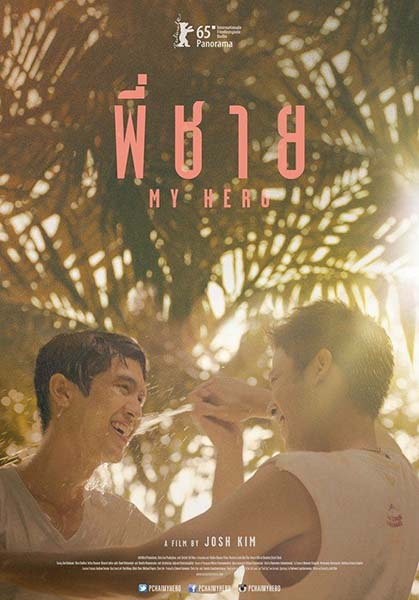
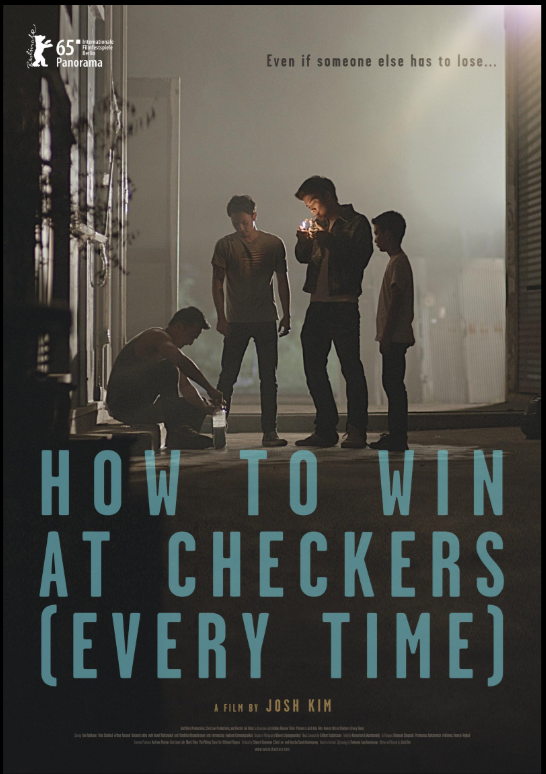
Efforts to end compulsory military service aren’t new. Since 2019 there have been bills and attempts to abolish it, but conservatives resist. Even before the political debate, cinema had already touched on the subject. The 2015 gay film “How to Win at Checkers (Every Time)”, released in Brazil as Como Vencer no Jogo (Sempre), portrays precisely the corruption and inequality of military recruitment in Thailand. After reading this text, it would be a good idea to watch the film to see how Thai people themselves see the issue. Also read Amnesty International’s 2020 report. I guarantee they’ll open your mind to the reality of the world, which is much less festive and colorful than the funny videos we see online.