
Perhaps, in some context, some fans' concern about BL leaving the "bubble" might even make sense, although that bubble can no longer be considered small, and hasn't been for a long time. But that's not the point here. I actually believe that the only way to significantly raise the level of the industry's current productions, …

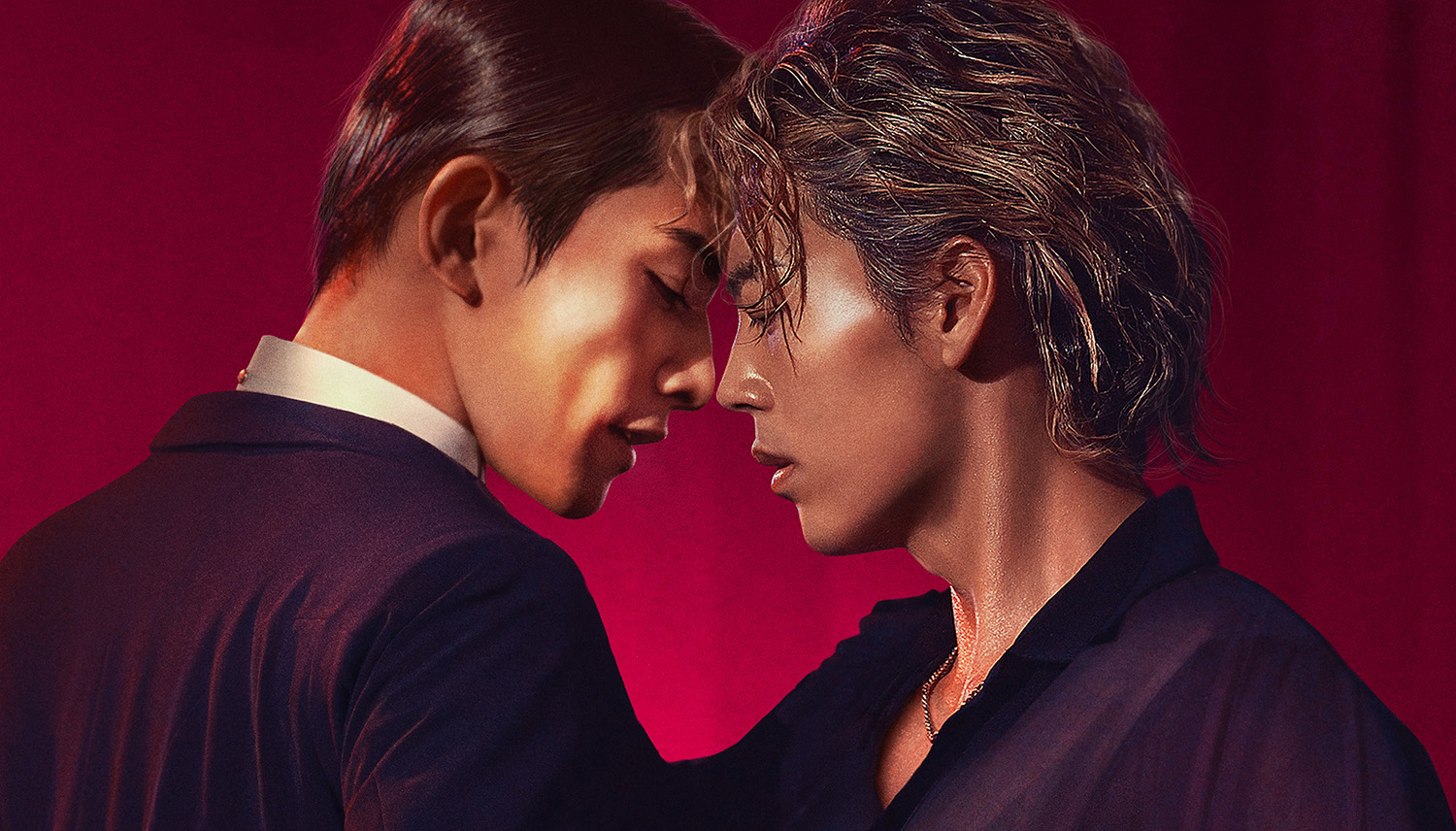
Perhaps, in some context, some fans’ concern about BL leaving the “bubble” might even make sense, although that bubble can no longer be considered small, and hasn’t been for a long time. But that’s not the point here. I actually believe that the only way to significantly raise the level of the industry’s current productions, and of everything it suffers, is precisely this expansion. And, ambitiously, 10DANCE may have redefined the standards of what we now understand as quality in a BL.
Announced in 2024 and released at the end of this year, the Netflix original film is an adaptation of Sato Ito’s manga and stars Machida Keita as Sugiki Shinya and Takeuchi Ryoma as Suzuki Shinya. Keita is already a well-known face, both among BL fans for starring in what became an industry classic, Cherry Magic! (2020), and among the general public, especially after the global success of Alice in Borderland (2020). Ryoma isn’t far behind his partner in star power — he led the Japanese version of Itaewon Class (2022) — but in 10DANCE he finds perhaps his most impactful project yet.
Building the narrative in 10DANCE
In the plot, the characters, originally dancers of different styles — one specializing in ballroom and the other in Latin dance — decide to team up for a competition that requires mastery of both styles, each with five different dances (hence the name 10DANCE). Along the way, they realize there’s something beyond the performance: love, and feelings bigger than the professional.
The key point is that the two work so intrinsically that, from the start, you can tell one already harbored a desire for the other. I don’t mean sexual desire here, but human desire. The longing to understand how someone connects so completely with dance, and how that surrender awakens in you an almost painful urge to reach the same kind of bond.
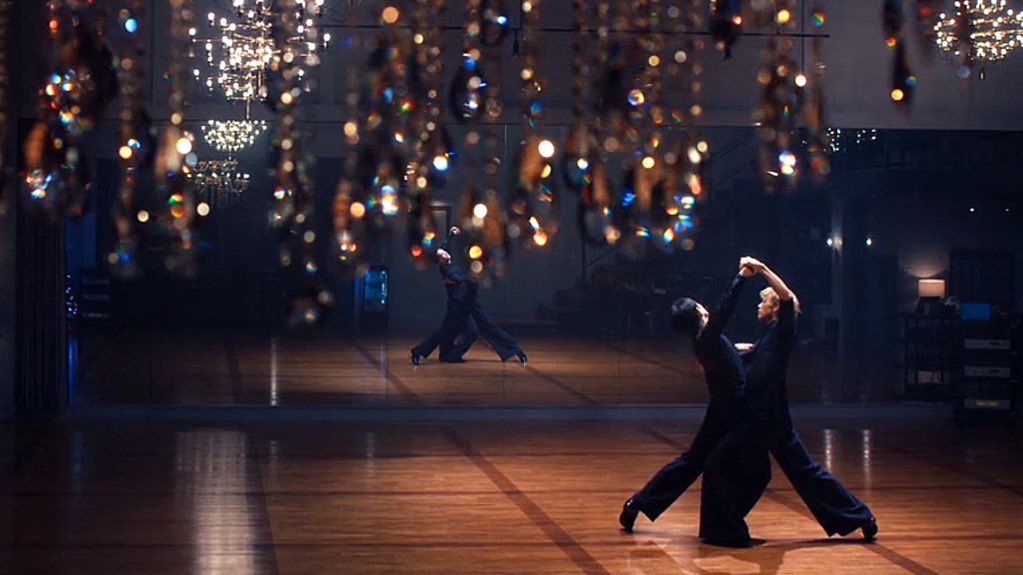
In 10DANCE, the direction understands the body
Like any good enemies to lovers, the film presents a brief initial rivalry that creates the tension needed to catapult all the emotional weight throughout the film. This conflict, however, doesn’t drag on longer than necessary. Quickly, both understand that what they feel isn’t something to be controlled, but lived, just like dance itself.
On the technical side, without bias, 10DANCE is a film that doesn’t miss. The direction and screenplay, both by Otomo Keishi, managed to squeeze out, more than any machine the audiovisual industry has ever built, all the technical and expressive potential Machida Keita and Ryoma Takeuchi could deliver. Keishi had already shown sensitivity in handling narratives with gay subtext in Beneath the Shadow (2020), a melancholic slow burn that, despite its low-key release, left an emotional mark on those who watched it.
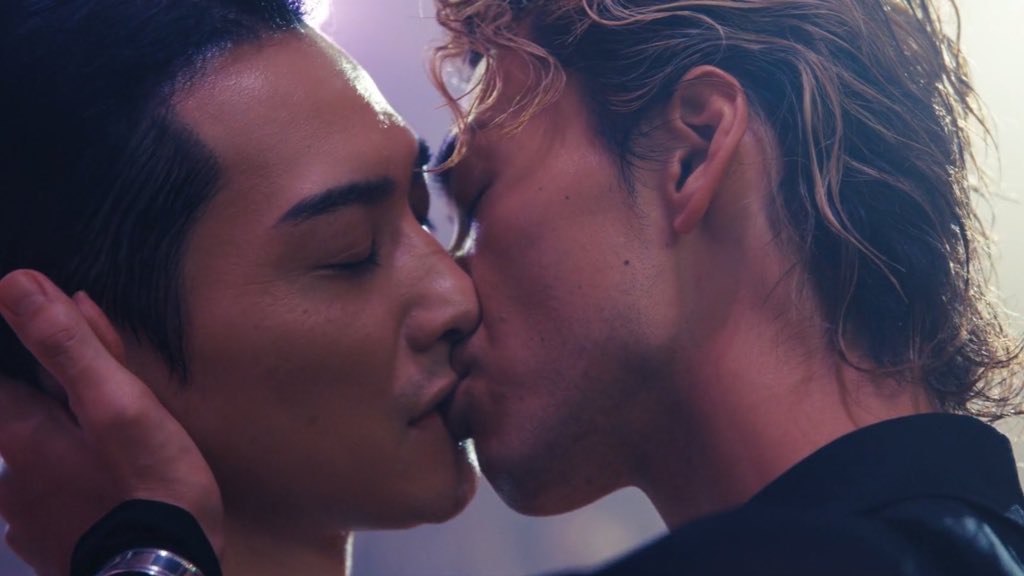
The soundtrack, with Bésame Mucho as one of its highlights, stirs two very clear feelings. The first is closeness: there’s an indirect connection to our own Latin roots, full of intensity and emotion. The second is love, portrayed in a deeply sensual way. The soundtrack as a whole works as support for what turns out to be the production’s greatest asset.
Unlike many recent productions that announce promising plots in their trailers but end up falling back on the exhaustively repeated formula of “meet, get jealous, fight and finally date,” leaving aside elements that could enrich the narrative and that, in theory, would be a fundamental part of the plot, 10DANCE manages to balance two fundamental pillars: love and dance. Both coexist on equal footing, without one being reduced to a mere backdrop for the other.

Love and dance as inseparable forces
At one point, Sugiki says that, in the end, he and Suzuki could never become one. A reflection based on the traditional logic of ballroom dancing, in which there’s a man who leads and a woman who is led. What he hadn’t yet understood is that this line didn’t reflect what he already felt. At that point, the two characters were deeply entangled in an intense, inseparable relationship. There is indeed a tension between love and dance, but it only shows up in each one’s individual goals at certain moments in the work. On the BL’s symbolic level, this conflict simply doesn’t exist: both themes support each other and only make sense because they coexist. The film never puts one above the other. In one of the film’s most emblematic scenes, Marta, Sugiki’s instructor, spells out what 10DANCE sensitively builds throughout the entire narrative: dance doesn’t exist without love. According to her, that’s exactly what he was missing. Technique, however flawless, never reaches its fullness when detached from emotional surrender.
The cinematography, in turn, stands on its own. Knowing how to explore the city, its settings and the constant movement it produces, especially at night, is a merit reserved for few. Takeuchi Ryoma’s body, in this context, isn’t just exposed, but choreographed by the camera. It was designed to be a work within a work. Abs, tattoos and gestures work as an extension of the narrative and turn the physical into aesthetic language. Machida Keita, in turn, responds with an equally sensitive and precise performance. Together, the two deliver sensual, connected and technically refined performances.
This is simply THE KISS SCENE in 10DANCE. pic.twitter.com/VCw2BLU71n
— lısɐɹᙠ xᴉlɟʇǝN (@NetflixBrasil) December 19, 2025
Emotional intoxication in motion
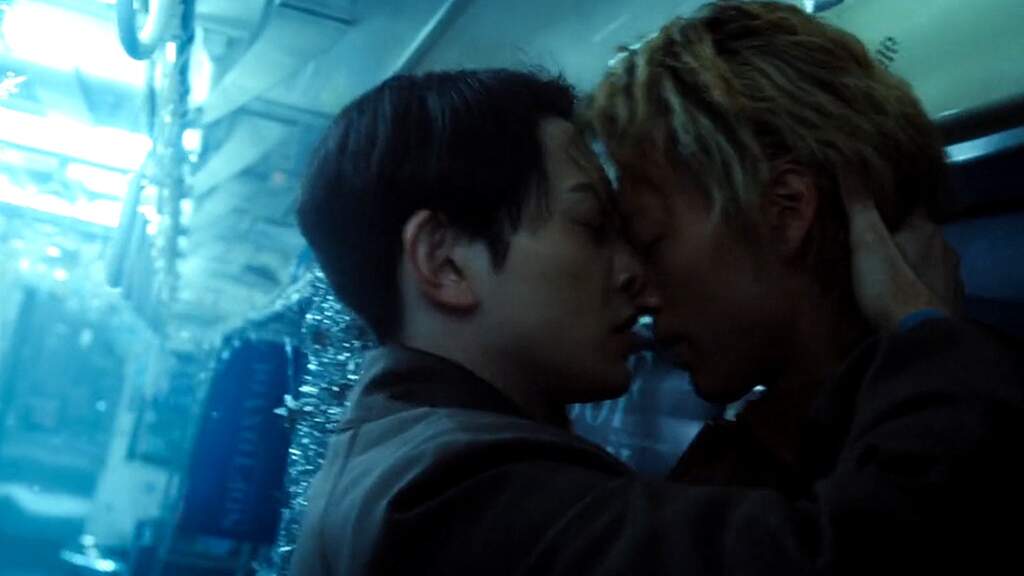
The couple’s first kiss comes in a moment of euphoria on a train and establishes itself as one of the most beautiful scenes in the film. The use of motion blur, probably captured with a slow shutter speed, and slow motion elevates the critical and sensitive gaze of any even slightly attentive viewer. When was the last time we saw, in contemporary audiovisual work, an intimate scene built with such aesthetic care? Enough of the same old thing. Everything here was very well thought out. It’s beautiful to see this fluid, “melting” quality translate into what I’d dare call “emotional intoxication,” as if the two were merging.
Well, it’s no secret that when money comes in, the level goes up. That’s how things work, and they worked very well in 10DANCE. From the use of technology to technical execution, from casting to artistic creation, everything reflects an ambitious project. Add to that the massive promotion in Japan, something not seen since the success of Alice in Borderland, and the result is historic.
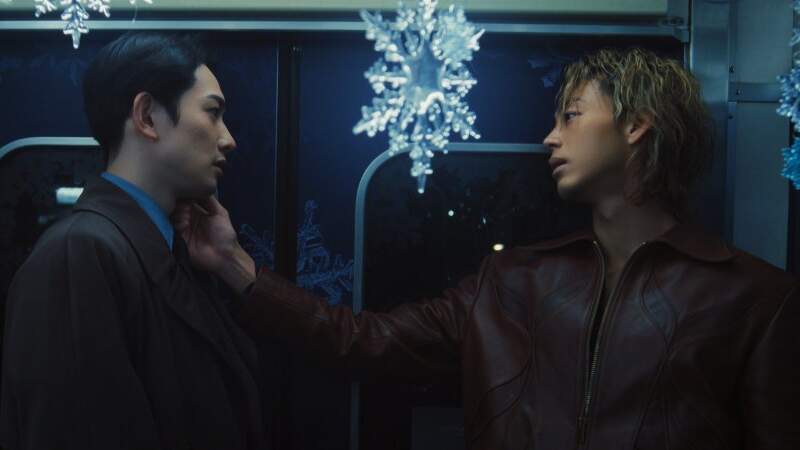
The firsts that mark the beginning of countless more
For the first time, a BL was dubbed in Portuguese. For the first time, a BL made Netflix Brazil’s TOP 10 and reached TOP 1 in Japan. For the first time, a BL took over the Shibuya crossing with large-scale promotion. For the first time, we have a BL produced by the world’s biggest streaming service. That’s a lot of “firsts” signaling new paths, inside and outside the country that is the cradle of the Boys’ Love industry.
In total, 10DANCE was dubbed into more than ten languages and subtitled in more than thirty, a key move for BL to break linguistic and cultural barriers and reach the top of the most-watched content in several countries. We’re seeing a BL truly legitimized as a global product, able to speak to audiences far beyond its traditional markets.
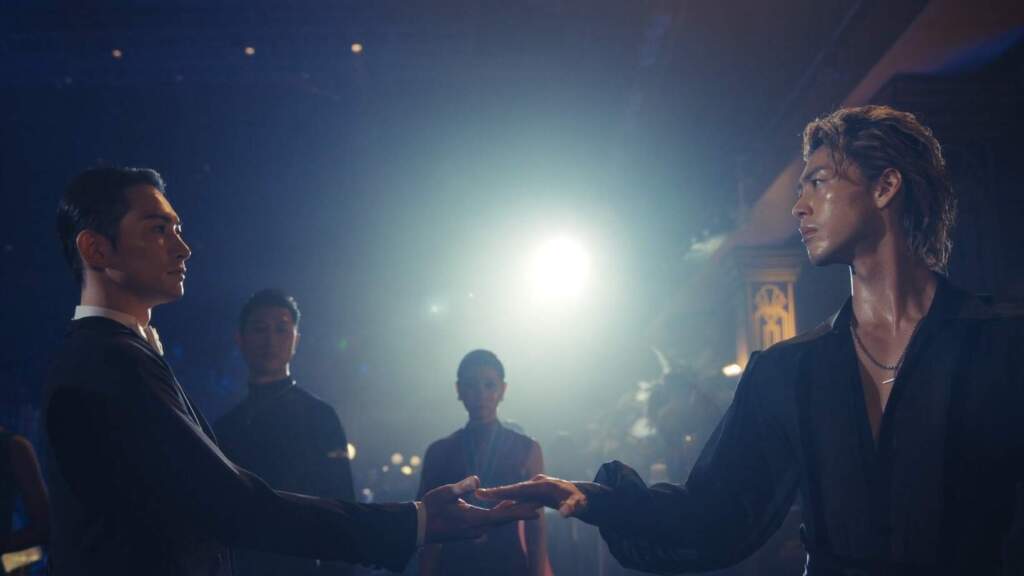
10DANCE breaks away from worn-out formulas, balances the two big themes at the heart of the work, builds a delicious tension and redefines what we now understand as quality in BL. For some, the ending may raise questions or a desire for a more immediate resolution, with a clearly defined beginning, middle and end. But in a cultural landscape shaped by TikTok’s accelerated logic, maybe that discomfort works as a bittersweet reminder: some stories need time. And everything suggests part two won’t take long to hit screens.